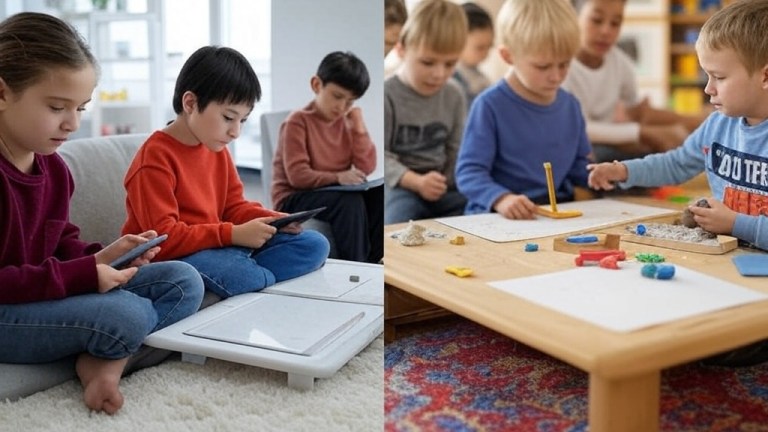
Discuss the impact of reduced hands-on play on kids dexterity and coordination, plus practical activities to rebuild fine motor skills.
In our modern world, digital devices have become central to children’s lives, significantly impacting the traditional nature of childhood play. While technology offers numerous educational and entertainment benefits, pediatric occupational therapists are increasingly observing an alarming decline in children’s fine motor skills. This decline directly correlates with the increased screen time replacing hands-on play.
Fine motor skills involve precise movements using small muscle groups, primarily in the hands and fingers. These skills are fundamental for essential daily tasks like handwriting, buttoning clothes, tying shoes, using utensils and manipulating objects, critical competencies for self-care, academic achievement and overall independence. Historically, children develop fine motor abilities naturally through physical play including activities like stacking blocks, assembling puzzles and crafting. However, today’s children spend significantly more time tapping screens rather than engaging in these traditional activities, leading to underdeveloped fine motor integration.
Screens demand limited fine motor control compared to physical interactions. Swiping and tapping primarily engage large movements, missing the intricate finger movements and hand-eye coordination cultivated by hands-on play. This shift from tactile experiences to passive digital interactions can negatively affect a child’s dexterity, precision and coordination. Consequently, everyday tasks once considered routine, such as fastening buttons, handwriting legibly or tying shoelaces, now challenge many young learners.
Occupational therapists frequently report growing numbers of children needing fine motor skills therapy to cope with academic and daily living demands. Fine motor integration, the coordination of hand and finger movements with visual input, is essential for tasks like writing, drawing and reading. Reduced physical playtime diminishes opportunities for children to naturally build and reinforce these crucial neural connections.
Fortunately, parents, caregivers and educators can proactively address these concerns. Introducing intentional, screen-free playtime into children’s routines provides essential opportunities to develop and enhance fine motor skills. Activities such as crafting, bead-stringing, Lego-building, and assembling puzzles effectively build finger strength, precision, and hand-eye coordination. Additionally, these activities offer cognitive benefits including improved concentration, spatial reasoning and creativity.
Occupational therapy activities for fine motor skills specifically target these developmental gaps through engaging and playful experiences. Customized Al therapists often incorporate customized interventions such as clay modeling, finger painting, scissor skills, threading beads and sorting small objects. Each activity intentionally targets specific motor movements and muscle groups, providing targeted practice essential for improving fine motor coordination.
Structured, playful activities recommended by occupational therapists include:
- Crafting and Arts: Painting, coloring, drawing or cutting paper strengthens finger muscles and promotes visual-motor integration.
- Building and Construction: Lego-building or block stacking encourages precise finger manipulation, spatial awareness and problem-solving skills.
- Fine Manipulation Activities: Bead-stringing, pegboards and sorting small items enhance finger dexterity and hand-eye coordination.
- Sensory Play: Engaging with playdough, clay, kinetic sand or slime helps improve finger strength and tactile sensitivity.
- Writing and Drawing Games: Activities such as tracing shapes, letter formation exercises or mazes boost fine motor precision essential for academic tasks.
Integrating these hands-on activities into everyday routines is straightforward and highly beneficial. Establish regular, scheduled times for screen-free, motor skill-focused play, providing consistent practice opportunities. Short, frequent sessions offer more developmental benefits than sporadic, lengthy sessions. Creating engaging, playful scenarios enhances children’s motivation, making skill-building enjoyable rather than a chore.
Educational settings can also significantly influence the promotion of fine motor skills. Classrooms that prioritize balanced learning, combining digital activities with traditional play-based tasks, create an optimal environment for motor skill development. Teachers can integrate simple fine motor exercises into daily lessons across subjects, fostering frequent practice opportunities. Group activities that incorporate fine motor tasks such as collaborative art projects or classroom-based crafting sessions, further encourage social skills alongside motor development.
Write Steps emphasizes the importance of early interventions and targeted occupational therapy support. Recognizing signs of delayed fine motor skills early and providing timely, appropriate interventions significantly improves children’s developmental outcomes. Write Steps advocates a balanced approach, combining digital literacy with essential hands-on learning experiences, ensuring children develop fully integrated fine motor abilities necessary for academic and personal success.
Awareness and education form additional crucial components of addressing this digital dilemma. Parents, caregivers and educators must understand the impact of excessive screen time on fine motor skills and recognize the value of intentional, hands-on activities. Workshops, community events and accessible online resources can help spread this vital awareness, empowering caregivers to implement beneficial play-based strategies at home and in schools.
Ultimately, striking a healthy balance between digital engagement and physical play is key to reversing the decline in children’s fine motor skills. The right combination ensures that children gain the numerous advantages of technology while actively developing the essential fine motor capabilities vital for their future success. By embracing intentional, playful and therapeutic activities, families and educators can rebuild children’s fine motor integration, preparing them for a productive and independent future.