
Is a San Diego Pediatric Occupational Therapist Right for Your Child?
Learn when pediatric OT may help your child with handwriting, sensory processing, fine motor skills, school readiness, coordination, and daily routines in San Diego.
Parents often notice small struggles before they know what to call them. A child may avoid writing, press too hard with a pencil, bump into furniture, resist getting dressed, melt down during grooming, or come home exhausted after school. But when the same challenges keep interrupting daily routines, it may be time to ask whether pediatric OT support could help.
Many families first hear about Pediatric Occupational Therapy from a teacher, pediatrician, or school specialist who notices concerns with handwriting, coordination, sensory regulation, attention, or classroom participation. It is to understand how the child’s body, senses, movement, and learning skills work together, then build practical abilities that support confidence and independence.
A San Diego Pediatric Occupational Therapist can help parents connect what they see at home with what teachers may see at school. For families researching pediatric occupational therapy in San Diego, the key question is simple: are your child’s challenges affecting learning, routines, play, self-care, or emotional comfort?
At WriteSteps, pediatric OT support is approached with attention to each child’s strengths, routines, and challenges so families receive guidance that feels practical rather than overwhelming.
What Pediatric Occupational Therapy Helps Children Build
Childhood “occupations” include writing, playing, dressing, eating, cutting, drawing, organizing school materials, joining group activities, and managing everyday routines. These tasks depend on hidden skills such as hand strength, bilateral coordination, visual perception, balance, motor planning, body awareness, sensory processing, and self-regulation.
For example, a child who refuses handwriting may not be lazy or careless. Writing may feel tiring because of weak hand endurance, poor posture, difficulty spacing letters, or trouble coordinating the eyes and hands. A child who crashes into furniture may be seeking body input. A child who reacts strongly to clothing, noise, or transitions may be experiencing sensory overload.
This is why a good OT process looks at the whole child. The therapist observes movement, play, pencil control, fine motor skills, sensory responses, attention, and functional routines. Once the “why” becomes clearer, support becomes more useful.
Signs Your Child May Benefit From OT
Parents often consider OT when struggles are repeated, intense, or affecting family life. Common signs include messy or tiring handwriting, difficulty using scissors, trouble with buttons or zippers, poor pencil grasp, clumsiness, limited coordination, texture-related picky eating, or strong reactions to socks, tags, hair brushing, or loud places.
School signs can be just as important. A child may take much longer than classmates to finish written work, avoid coloring or worksheets, complain that their hand hurts, lose their place while reading, or become upset when copying from the board. At home, parents may notice hard mornings, frequent meltdowns during transitions, difficulty calming after excitement, or resistance to self-care.
One sign alone does not always mean therapy is needed. Patterns matter. If the same issues continue across settings and start affecting confidence, independence, or family routines, an OT evaluation can provide direction.
Why These Challenges Are Often Misread
OT-related struggles are not always obvious. A child may speak well, learn quickly, or play creatively while still lacking the motor and sensory foundations needed for school and daily independence.
This can lead adults to misread behavior. A child who avoids writing may be escaping discomfort. A child who moves constantly may be regulating their nervous system. When parents understand the reason behind the response, they can use strategies that fit the child’s needs.
What the OT Process Usually Looks Like
The process often begins with a conversation about the child’s history, routines, strengths, school concerns, sensory patterns, and family goals. A therapist may ask about handwriting, play, dressing, feeding, movement, sleep, transitions, and classroom performance.
An evaluation may include standardized tools, clinical observation, fine motor tasks, handwriting samples, balance and coordination activities, sensory observations, and parent input. The purpose is to identify the underlying skills that support or interfere with real-life success.
After that, goals should be functional. Instead of only saying “improve fine motor skills,” a plan may focus on writing with less fatigue, using utensils more confidently, improving dressing independence, handling transitions better, or participating more comfortably at school. Families comparing occupational therapy services should look for care that connects therapy goals to daily routines, not just isolated exercises.
WriteSteps helps families understand therapy goals in plain language, making it easier to connect clinic-based progress with school participation, home routines, and daily independence.
How Therapy Uses Play to Create Real Progress
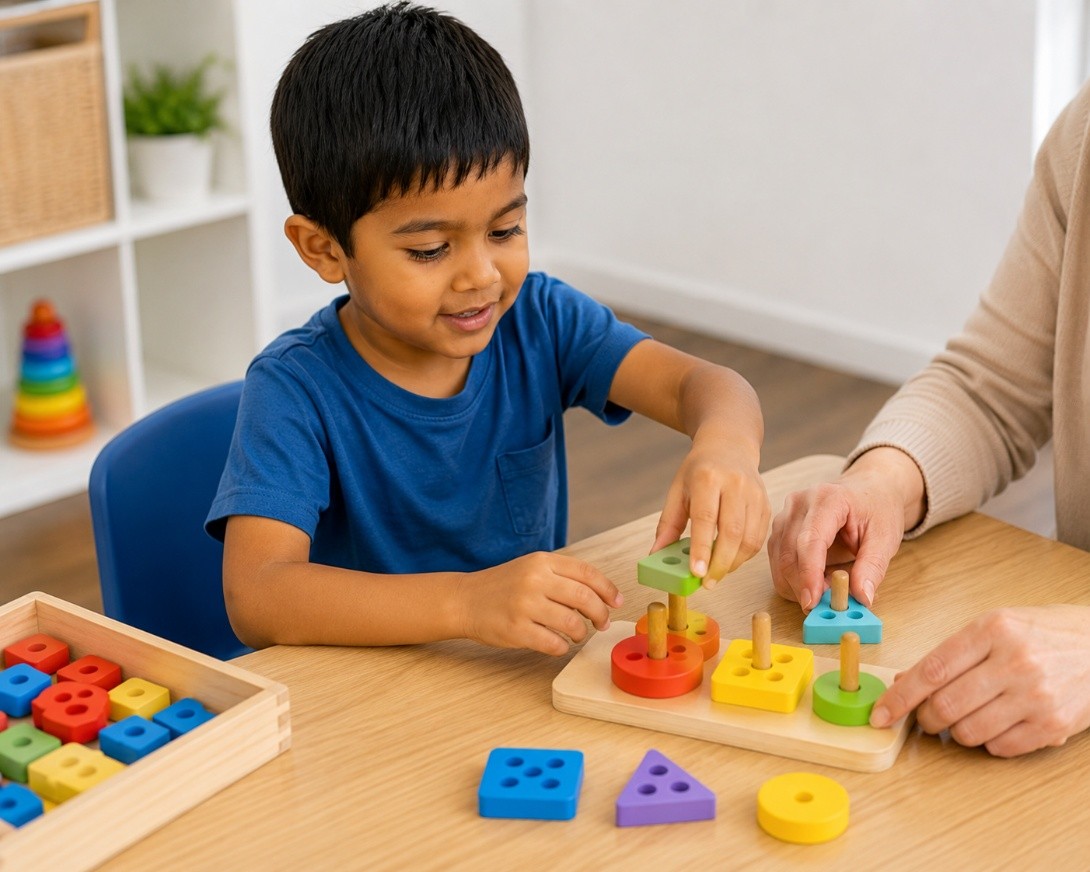
Pediatric OT often looks playful, but each activity has a purpose. Movement games may build core strength and body awareness. Putty, tweezers, clothespins, and small manipulatives may improve finger strength and coordination. Swings, obstacle courses, and balance tasks may support regulation, motor planning, and confidence. Drawing, tracing, copying, and visual scanning tasks may support school readiness and handwriting.
The most helpful occupational therapy activities are selected for the child’s specific needs. A therapist may also suggest home strategies, such as a movement break before homework, a better chair-and-table setup, a visual schedule, pencil adaptations, calming sensory tools, or hand-strengthening games. These small changes can make routines feel less stressful when matched to the child’s body and learning style.
Benefits Families May Notice
Progress is often seen in everyday moments. A child may get dressed with less help, tolerate grooming more comfortably, write with better control, complete homework with fewer tears, move more safely, or recover faster after frustration. Teachers may notice stronger participation, better task completion, or improved classroom confidence.
The emotional benefit matters too. Children who feel capable are more willing to try hard things. Parents who understand their child’s needs can respond with more patience and better tools. Choosing occupational therapy services is not about adding another appointment to a busy schedule; it is about helping a child participate more fully in daily life.
If you are unsure, start by writing down patterns. Which routines are hardest? How often do problems happen? Are school, play, self-care, sleep, meals, handwriting, or emotional regulation affected? You can also explore trusted child development resources or begin with a complimentary phone screening to decide whether a full evaluation makes sense.
For parents who want clearer next steps, WriteSteps can be a helpful place to learn how pediatric OT may support a child’s everyday participation and confidence.
FAQs
What age is right for pediatric OT?
Children can benefit at many ages, from toddlers building early motor and sensory skills to school-age children working on handwriting, coordination, or self-care. The right timing depends less on age and more on whether daily routines, learning, independence, or confidence are being affected.
Does my child need a diagnosis before starting OT?
Not always. Many families seek OT because they notice functional struggles before a formal diagnosis exists. An OT evaluation can help identify skill gaps and recommend next steps. If another medical, developmental, or school-based assessment is needed, the therapist may suggest appropriate referrals.
What occupational therapy activities can help at home?
Helpful home ideas may include hand-strengthening games, movement breaks, visual schedules, cutting practice, drawing, building with small objects, and calming sensory routines. The right activities depend on the child’s needs, so individualized guidance is usually more effective than a general checklist.
Can OT help with handwriting problems?
Yes, OT can help when handwriting issues are connected to pencil grasp, hand strength, posture, visual-motor integration, spacing, letter formation, or endurance. Therapy looks beyond neatness and focuses on the skills that make writing easier, more efficient, and less frustrating.
How long does progress take?
Progress depends on the child’s goals, consistency, underlying challenges, and support between sessions. Some families notice small changes within weeks, while deeper motor or sensory skills may take longer. Good therapy tracks functional gains, not just performance inside the clinic.
Is OT only for children with major delays?
No. OT can support children with mild, moderate, or complex needs. A child does not need a major delay to benefit from help with handwriting, coordination, sensory regulation, school readiness, or self-care. Practical support can be valuable whenever daily life is harder than it should be.
Wondering if OT could help your child?
Schedule a complimentary phone screening with Danielle — no pressure, just a conversation.
Book a screening