
How Occupational Therapy Helps with Handwriting and Motor Coordination
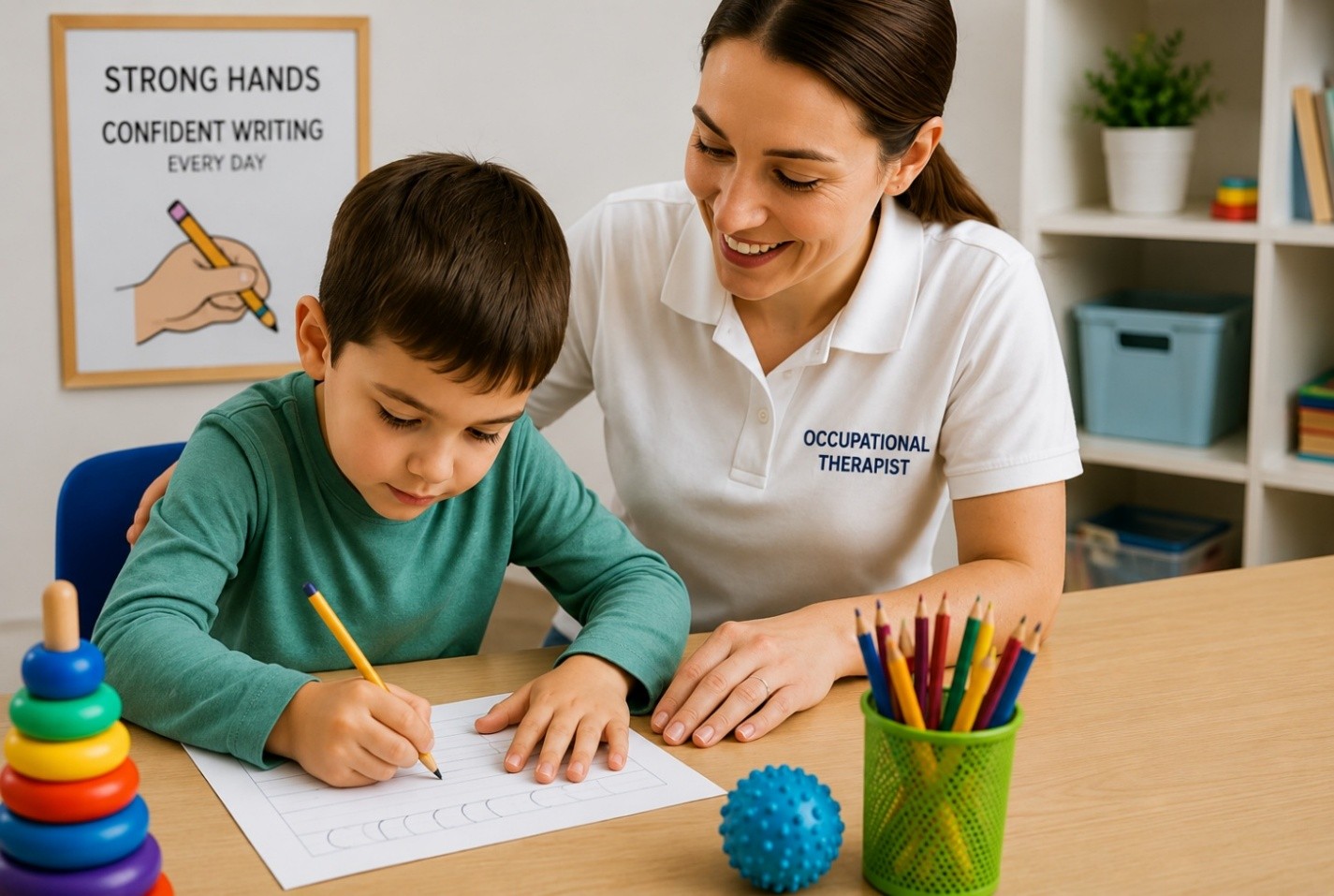
Handwriting is more than putting words on paper. It depends on muscle strength, hand control, posture, visual processing, attention, and coordination — and occupational therapy addresses every layer.
Handwriting is more than putting words on paper. It is a complex skill that depends on muscle strength, hand control, posture, visual processing, attention, and coordination. When a child struggles to write clearly or tires quickly during writing tasks, the challenge often extends beyond holding a pencil correctly. These difficulties can affect classroom performance, confidence, and everyday learning.
This is where occupational therapy for handwriting can make a meaningful difference. Occupational therapists look beyond the final written product to understand why handwriting is difficult. They assess movement patterns, fine motor skills, sensory processing, and visual-motor integration before creating individualized strategies that help children develop stronger writing abilities.
Understanding the Connection Between Handwriting and Motor Coordination: Handwriting requires multiple body systems to work together efficiently. Children need enough finger strength to grip a pencil, shoulder stability to maintain proper posture, and eye-hand coordination to accurately form letters. They also rely on planning skills to organize movements and produce consistent writing.
When one or more of these foundational skills are underdeveloped, handwriting may become slow, messy, or frustrating. Some children press too hard on the paper, while others struggle to keep letters aligned or maintain consistent spacing. Rather than focusing solely on improving handwriting practice, occupational therapists identify the underlying causes contributing to these difficulties.
Why Children Experience Handwriting Difficulties: Common reasons include weak fine motor skills, reduced hand strength, poor bilateral coordination, limited finger dexterity, visual perception challenges, or sensory processing differences. Some children also have difficulty with motor planning, making it harder to sequence movements required for forming letters. Children with developmental conditions such as dysgraphia, developmental coordination disorder, autism spectrum disorder, or ADHD may also experience handwriting challenges — though handwriting difficulties are not limited to these diagnoses.
How Occupational Therapy Supports Handwriting Development: An occupational therapist begins with a comprehensive assessment to understand how a child moves, grips writing tools, processes sensory information, and performs classroom tasks. The therapist then develops a personalized intervention plan based on the child's strengths and needs. Sessions often combine movement-based exercises, sensory experiences, structured handwriting instruction, and playful activities that motivate children to participate consistently.
Occupational Therapy Handwriting Activities That Improve Motor Skills: Hand strengthening activities such as squeezing therapy putty, using clothespins, threading beads, or building with small construction toys improve finger strength and dexterity. Fine motor coordination exercises — picking up small objects with tweezers, completing pegboards, buttoning clothing, or manipulating coins — improve the isolated finger control necessary for forming letters accurately. Visual-motor integration activities like tracing patterns, copying shapes, completing mazes, and drawing geometric figures strengthen the eye-hand connection. Bilateral coordination exercises such as cutting with scissors, folding paper, or stabilizing paper while writing improve overall motor efficiency. Sensory-based activities like writing in sand, shaving cream, or textured materials provide tactile feedback that enhances letter formation.
Addressing Common Challenges Beyond Letter Formation: Postural stability plays a major role in writing endurance. If children cannot maintain an upright sitting position, they often compensate with awkward hand movements that reduce writing quality. Grip patterns also matter — while there is no single 'perfect' pencil grip, inefficient grasp patterns may limit endurance and control. Letter sizing, spacing, alignment, and writing speed are additional areas addressed during therapy. Attention, focus, and sensory regulation are equally important, and occupational therapy incorporates strategies that improve self-regulation alongside motor development.
Real-World Applications of Occupational Therapy: Consider a child who avoids classroom writing because forming letters feels exhausting. After participating in a structured therapy program, the child develops stronger hand muscles, improved coordination, and greater writing confidence. Another child may struggle with coloring, cutting, tying shoes, or using eating utensils — as therapy strengthens fine motor coordination, improvements appear across multiple daily activities, not just handwriting.
The Long-Term Benefits of Early Intervention: Children who receive timely intervention often develop stronger fine motor skills, improved classroom participation, increased confidence, and greater independence. Writing becomes less physically demanding, allowing students to focus more on expressing ideas rather than struggling with mechanics. Improved motor coordination also supports drawing, keyboarding, sports participation, art projects, and daily living skills. Perhaps most importantly, children begin viewing themselves as capable learners rather than becoming discouraged by repeated writing challenges.
Supporting Progress at Home and School: Parents can encourage activities such as puzzles, drawing, clay modeling, building blocks, and simple crafts that strengthen fine motor skills naturally. Short, enjoyable practice sessions are often more effective than lengthy handwriting drills. Teachers can provide adaptive strategies, including appropriate seating, pencil grips when recommended, writing breaks, and multisensory learning experiences. At WriteSteps, professional occupational therapy services provide guidance tailored to each child's unique developmental needs, making home and classroom support more effective.
Wondering if OT could help your child?
Schedule a complimentary phone screening with Danielle — no pressure, just a conversation.
Book a screening