
Choosing the Right Sensory Processing Disorder Treatment for Your Child
When a child reacts strongly to sounds, avoids certain clothing, crashes into furniture, struggles with transitions, or seems constantly “on the go,” parents often know something is wrong long before they have the words for it. Sensory challenges can show up during meals, schoolwork, playdates, bedtime, handwriting, dressing, or even simple family outings. What looks like defiance, distraction, or emotional overreaction may actually be the nervous system working too hard to process everyday input.
Choosing the right Sensory Processing Disorder Treatment matters because every child’s sensory profile is different. One child may feel overwhelmed by noise and touch, while another may seek intense movement, pressure, and climbing. Some children experience both patterns depending on the day, environment, or activity. The goal is not to “fix” a child’s personality. The goal is to help the child feel safer, more organized, more confident, and more capable in daily life.
Understanding Sensory Processing Challenges
Sensory processing is the way the brain receives, organizes, and responds to information from the body and environment. This includes touch, sound, movement, body awareness, sight, taste, smell, balance, and internal body signals. When processing is smooth, a child can focus, move safely, learn, play, and respond to daily demands with more ease.
When sensory processing is difficult, the child may experience ordinary situations as uncomfortable, confusing, or even threatening. A busy classroom may feel too loud. A shirt tag may feel painful. Sitting still may feel almost impossible. A playground may be exciting for one child but frightening for another. These reactions are not always under the child’s control, which is why punishment or repeated correction often fails to create lasting change.
Parents may also hear the term sensory motor processing disorder when sensory challenges affect movement, coordination, posture, balance, motor planning, and body awareness. For example, a child may bump into objects, struggle with handwriting pressure, avoid playground equipment, or have trouble learning new physical tasks. Sensory and motor systems work closely together, so treatment often needs to address both.
Why One-Size-Fits-All Therapy Rarely Works
A common mistake is assuming that all sensory challenges require the same solution. Some families try noise-canceling headphones, weighted blankets, fidget tools, brushing routines, or movement breaks without knowing whether those strategies match the child’s actual needs. These tools may help some children, but they can be ineffective or even frustrating when used without proper evaluation.
The right treatment for sensory processing disorder begins with understanding the child’s full sensory profile. A skilled occupational therapist looks at how the child responds to touch, sound, movement, balance, pressure, transitions, attention demands, and daily routines. They also consider emotional regulation, fine motor skills, school participation, handwriting, self-care, play skills, and family concerns.
This is where WriteSteps can make a meaningful difference. Instead of guessing, therapy uses observation, parent input, clinical reasoning, and structured activities to identify why a child is struggling and what type of support is most appropriate.
Common Signs Parents Should Watch For
Sensory processing concerns can appear in many different ways. Some children are over-responsive. They may cover their ears, avoid messy play, dislike haircuts, refuse certain clothes, become upset in crowded places, or react strongly to unexpected touch. These children may seem anxious, rigid, or easily overwhelmed.
Other children are under-responsive or sensory seeking. They may spin, jump, crash, chew objects, lean on people, touch everything, or take unsafe physical risks. They may need more input than other children to feel calm and focused. In school, this may look like leaving the seat, pressing too hard with a pencil, moving constantly, or struggling to stay engaged.
Some children have motor planning difficulties. They may want to join activities but cannot figure out how to move their body successfully. This can affect climbing, catching a ball, using scissors, dressing, handwriting, or copying classroom tasks. These patterns are often connected to sensory motor processing disorder, especially when the brain has difficulty organizing body-based information.
How Occupational Therapy Helps
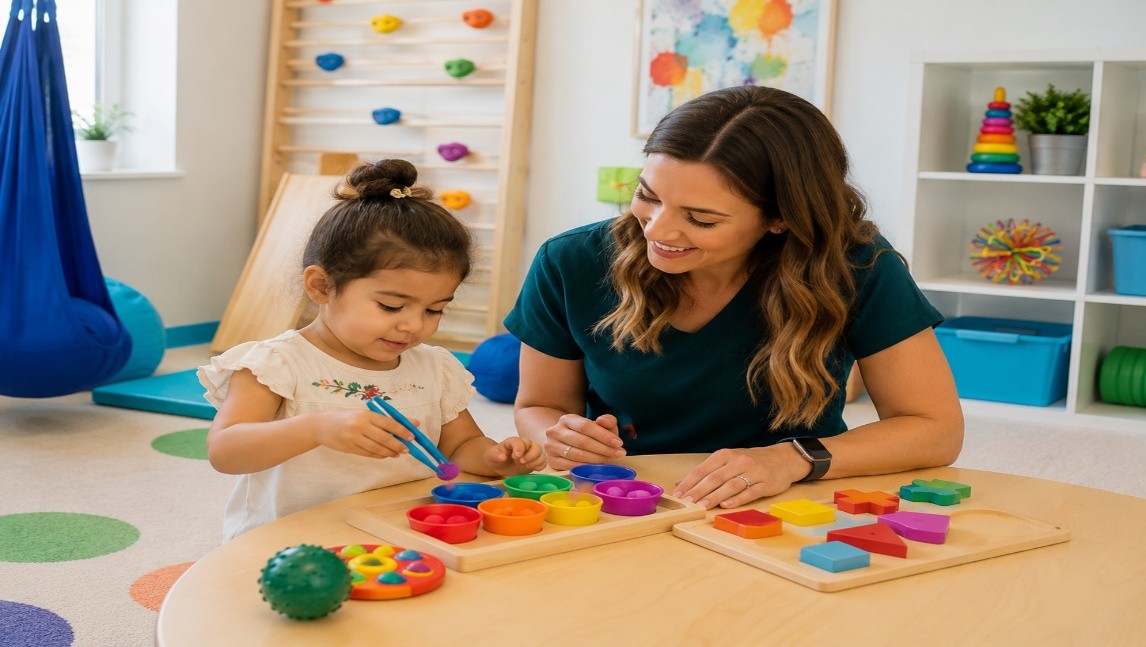
Sensory processing disorder occupational therapy focuses on helping the nervous system respond more effectively to sensory input. Therapy is active, purposeful, and individualized. A session may include movement, climbing, swinging, heavy work, tactile play, balance activities, fine motor tasks, body awareness exercises, and calming strategies. The therapist carefully adjusts the activity so the child is challenged but not overwhelmed.
The goal is not simply to keep the child busy. Every activity has a clinical purpose. Swinging may support vestibular processing and balance. Carrying weighted objects may improve body awareness. Messy play may help reduce tactile defensiveness. Obstacle courses may improve motor planning. Handwriting tasks may become easier when posture, shoulder stability, and sensory regulation improve first.
Parents looking for occupational therapy services should choose a provider who explains why each activity is being used, how it connects to real-life goals, and what progress may look like over time. Therapy should feel supportive and engaging for the child, while also giving parents practical strategies they can use at home.
What a Good Evaluation Should Include
Before starting therapy, the evaluation should look beyond surface behaviors. A child who refuses writing may not simply dislike schoolwork. They may have poor hand strength, weak postural control, tactile sensitivity, visual-motor difficulty, or trouble sitting in an organized way. A child who melts down at birthday parties may not be “dramatic.” The combination of noise, movement, lights, touch, and unpredictability may be too much for their nervous system.
A strong evaluation may include parent interviews, clinical observation, standardized testing when appropriate, sensory questionnaires, motor skill screening, and discussion of daily routines. The therapist should ask about school, home, sleep, meals, dressing, play, emotional regulation, attention, and transitions. This deeper picture helps create a treatment plan that fits the child’s real needs.
This is also the stage where goals should become clear. Instead of vague goals like “improve behavior,” therapy should target meaningful outcomes such as tolerating clothing, joining playground activities, improving handwriting endurance, reducing daily meltdowns, building independence with dressing, or helping the child stay calmer during school routines.
Choosing the Right Treatment Approach
The right treatment for sensory processing disorder should be child-centered, family-centered, and practical. Parents should feel included, not confused. A therapist should explain what they are seeing, what they are working on, and how therapy connects to everyday life.
A helpful plan often includes three parts. First, therapy sessions help the child build better sensory regulation and motor skills in a safe, structured setting. Second, home strategies help parents support the child between sessions. Third, school or classroom recommendations may help teachers understand the child’s needs and reduce unnecessary stress.
For example, a child who becomes overwhelmed during morning routines may benefit from deep pressure, predictable sequencing, clothing adjustments, and extra transition time. A child who seeks movement during class may need scheduled heavy work, alternative seating, or movement breaks. A child who avoids writing may need posture support, hand strengthening, sensory preparation, and gradual writing practice.
Parents can also explore sensory processing disorder occupational therapy resources to better understand how sensory challenges connect with handwriting, fine motor skills, regulation, and learning. Families can also visit WriteSteps for child-friendly guidance that connects sensory needs with everyday routines.
Real-World Example: From Daily Battles to Better Routines
Imagine a child who cries every morning when getting dressed, refuses socks, becomes upset in the car, and has trouble settling at school. Without sensory understanding, the family may think the child is being stubborn. But with proper evaluation, the therapist may identify tactile sensitivity, anxiety around transitions, and poor body regulation in the morning.
The treatment plan might include calming pressure activities before dressing, softer clothing options, a visual routine, gradual tolerance practice, and movement before school. Over time, the child may still have preferences, but mornings become less stressful. The goal is not perfection. The goal is progress that improves family life and helps the child feel more in control.
Now consider a child who climbs constantly, crashes into furniture, presses too hard when writing, and struggles to sit for homework. This child may need more proprioceptive input and structured movement. Therapy may include obstacle courses, climbing, pushing, pulling, resistance activities, and body awareness work. As regulation improves, the child may become more available for learning, writing, and listening.
Benefits Parents May Notice Over Time
Progress in sensory therapy is often seen in small but meaningful changes. A child may recover faster after frustration. They may tolerate grooming better, sit longer for meals, join more play activities, or manage school transitions with less distress. Handwriting may improve because the child’s posture, pressure control, and attention are stronger. Social confidence may grow because the child feels less overwhelmed in group settings.
With sensory processing disorder occupational therapy, parents often gain a better understanding of their child’s behavior. Instead of asking, “Why won’t my child listen?” they begin asking, “What is my child’s nervous system trying to manage?” That shift can reduce conflict and create a more supportive path forward.
The right approach also helps children build self-awareness. As they mature, they may learn what helps their body feel calm, focused, and ready. This can support independence at home, school, and in the community.
When to Speak with a ProfessionalWhen to Speak With a Professional
Parents do not need to wait until challenges become severe. If sensory reactions are affecting sleep, school participation, friendships, dressing, eating, handwriting, emotional regulation, or family routines, it may be time to speak with a pediatric occupational therapist. Early support can prevent small struggles from becoming larger patterns of avoidance, frustration, or low confidence.
A conversation with a therapist can help parents understand whether therapy is appropriate, what type of evaluation is needed, and which strategies may help first. Families who are unsure where to begin can ask about Sensory Processing Disorder Treatment through a therapy screening and take the next step with more clarity. WriteSteps can also guide families who want a clearer starting point before choosing ongoing therapy.
FAQs
What is the main goal of sensory processing therapy?
The main goal is to help a child’s nervous system respond to sensory input in a more organized way. Therapy may support emotional regulation, movement, attention, daily routines, handwriting, play, and independence. The best goals are practical and connected to real challenges at home, school, or in social settings.
How do I know if my child needs sensory therapy?
Your child may benefit from an evaluation if sensory reactions interfere with daily life. Signs may include strong reactions to noise, clothing, food textures, grooming, movement, transitions, or crowded places. Constant crashing, climbing, chewing, or difficulty sitting still may also suggest sensory processing concerns.
Is sensory therapy only for children with a diagnosis?
No. A child does not always need a formal diagnosis to benefit from occupational therapy. Many children receive support because sensory, motor, handwriting, or regulation challenges affect everyday participation. A professional evaluation helps determine whether therapy is appropriate and what type of plan may help.
How long does sensory processing therapy take?
The timeline depends on the child’s needs, goals, consistency, and daily environment. Some children need short-term support for specific routines, while others benefit from longer therapy to address deeper sensory and motor patterns. Progress is usually measured through daily function, not just session performance.
Can parents help with sensory strategies at home?
Yes. Parent involvement is very important. Therapists often teach home strategies such as movement breaks, calming routines, sensory-friendly transitions, heavy work activities, or environmental changes. The most effective strategies are simple, realistic, and matched to the child’s sensory profile.
Can sensory issues affect handwriting and schoolwork?
Yes. Sensory processing affects posture, attention, body awareness, pencil pressure, sitting tolerance, and motor planning. A child who struggles with writing may need support beyond letter practice. Addressing sensory and motor foundations can make school tasks feel easier and less frustrating.
SEO Meta Title
Choosing Sensory Processing Disorder Treatment for Children Guide
SEO Meta Description
Learn how to choose the right Sensory Processing Disorder Treatment for your child, including OT options, sensory strategies, and real-life outcomes for families.
URL Slug
choosing-right-sensory-processing-disorder-treatment-child
Wondering if OT could help your child?
Schedule a complimentary phone screening with Danielle — no pressure, just a conversation.
Book a screening